
【博多祇園山笠・追い山】午前4時59分、静寂が破られる瞬間。初観覧で見た“魂の走り” – Hakata Gion Yamakasa in Fukuoka
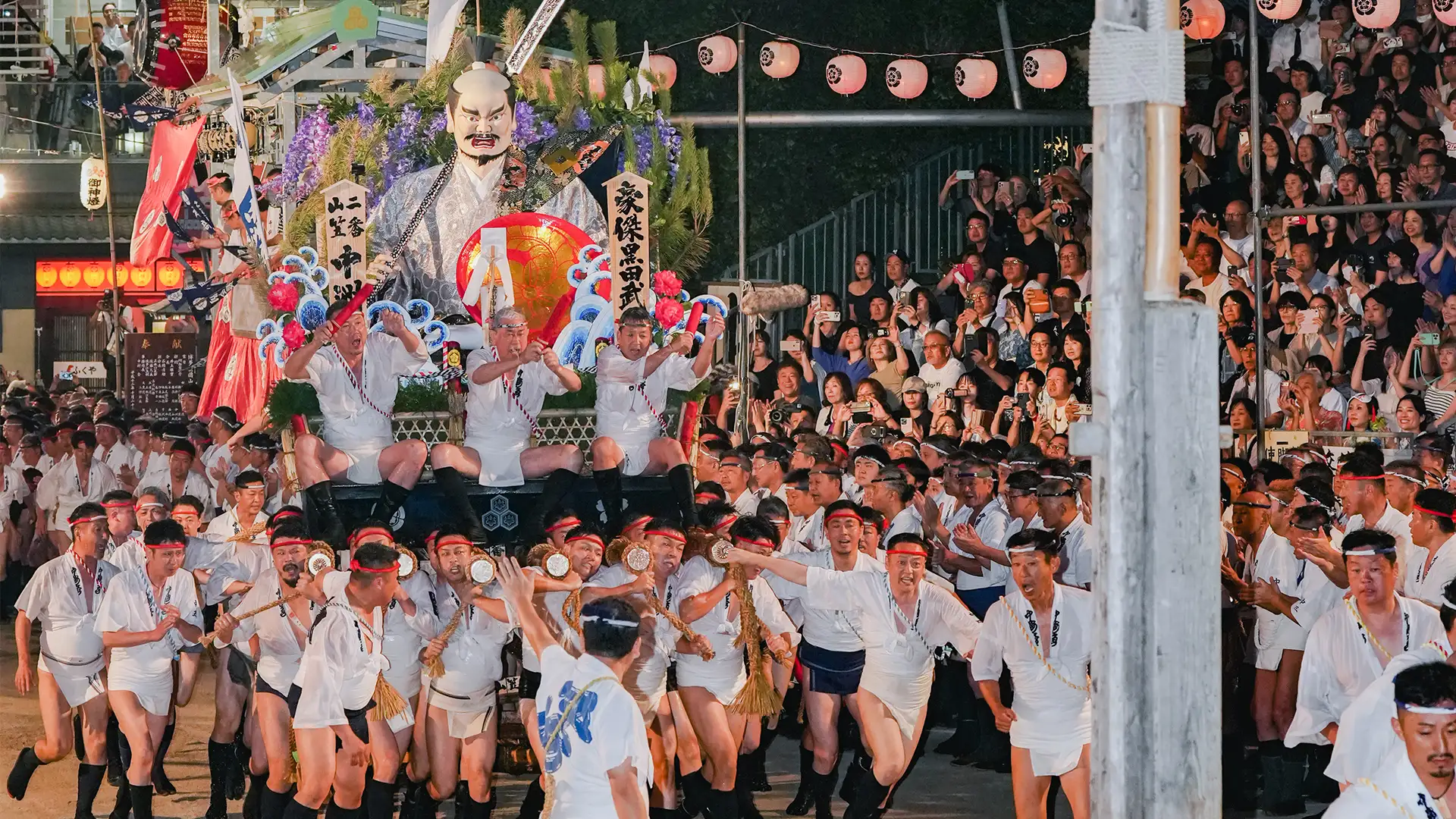
博多の魂が走り出す。博多祇園山笠を初めて現地撮影した裏側
1. どうしても行きたかった博多祇園山笠
日本全国には、浅草三社祭や大阪の岸和田だんじり祭りなど、数えきれないほど大きなお祭りがあります。
私自身、毎年いくつもの祭りを追いかけていますが、その中でも九州の博多祇園山笠は、以前からすごいすごいという噂を聞いていて
「いつか必ず行きたい」と強く思っていたお祭りの一つでした。
博多祇園山笠は、毎年7月1日から15日まで、約2週間にわたって行われます。
今回、私は7月11日頃から15日まで、実際に現地で山笠を見ることができました。
博多の街全体が、この祭り一色に染まる。
その熱量がとにかくすごい。
博多の人たちが、どれほどこの祭りに魂を込めているのか、街を歩くだけでひしひしと伝わってきます。
山笠には豪華な人形が乗っていて、丸太のような棒を使って進んでいきますが、神輿とは決定的に違う点があります。
山笠は下に台座があり、地面に接した状態で進むため、「担ぐ」ではなく「舁く(かく)」という表現を使うのです。
この言葉一つを取っても、博多祇園山笠が単なるイベントではなく、長い歴史と文化の上に成り立っている祭りであることを感じさせられました。
2. 博多祇園山笠とは?|基本情報
- 祭り名:博多祇園山笠(はかたぎおんやまかさ)
- 開催期間:毎年7月1日〜15日(約2週間)
- 最大の見どころ:7月15日早朝午前4:59から始まる「追い山笠(おいやま)」
- 特徴:“担ぐ”ではなく「舁く(かく)」。山笠は台座があり地面に接して進む。
- 現地の空気感:街全体が祭りモード。博多の魂・熱量を肌で感じる祭り。
- 公式Webpage:
博多祇園山笠公式サイト
3. 秋田から福岡へ。旅の始まりと小さなトラブル
私は7月11日に秋田を出発し、羽田経由で福岡へ向かいました。
…が、ここでちょっとしたトラブルが発生します。
羽田空港のターミナル拡張工事の影響で、これまでバス移動だったサテライトターミナルが徒歩移動に変更されており
とんでもない距離を歩かされたのです。たぶん、15分くらいは歩いているような感覚でした。
結果として福岡便に乗り遅れてしまいました!!
まー、ただの乗り遅れです(笑)。
幸いにも当日予約でANAの別便を取ることができ、無事に福岡へ到着。
追加料金、結構高し。大出費。
福岡空港から博多まで地下鉄で約10分。
このアクセスの良さは、本当に福岡らしいなと感じました。
コンパクトシティとはこのことですし、どの都市も見習うべき都市計画。
3-1. ホテルの話|博多のど真ん中で感じた「今の福岡」
案の定、ホテルはちょっと高かったんですけれど、今回はちょっと無理してアパホテルに泊まりました。
最近は、もうアパホテルも高級ホテルゾーンですよね。高い高い汗汗
とはいえ、博多祇園山笠を追いかけるには、やっぱり「立地」が正義。
朝から夜まで祭りのスケジュールが動く中で、ホテルまでの移動が短いだけで体力の残り方が全然違います。
特に追い山笠は午前4時59分スタートで、前日から場所取りや移動も絡んでくるので、
「睡眠の質」と「動線」はかなり重要だと感じました。
ちなみに、気になる宿泊料はといいますと
アパホテル博多祇園駅前で1泊15,000円弱といった感じでした。
もう都内と変わらない料金設定ですね。
駅目の前で利便性もよく、地下道が博多駅まで伸びており
雨でも地下通路を使って博多駅にアクセス可能です。(初見では迷いますが。。。)
3-2. 食べ物の話|水炊き・豚骨ラーメン…福岡の強さ
滞在していた期間は本当に福岡を楽しませてもらって、やっぱり福岡はご飯がおいしいんですよね。
私がこれまで一緒に働いてきた人の中にも福岡出身の方がすごく多くて、みんな本当に魅力的で仲良くさせてもらっているんです。
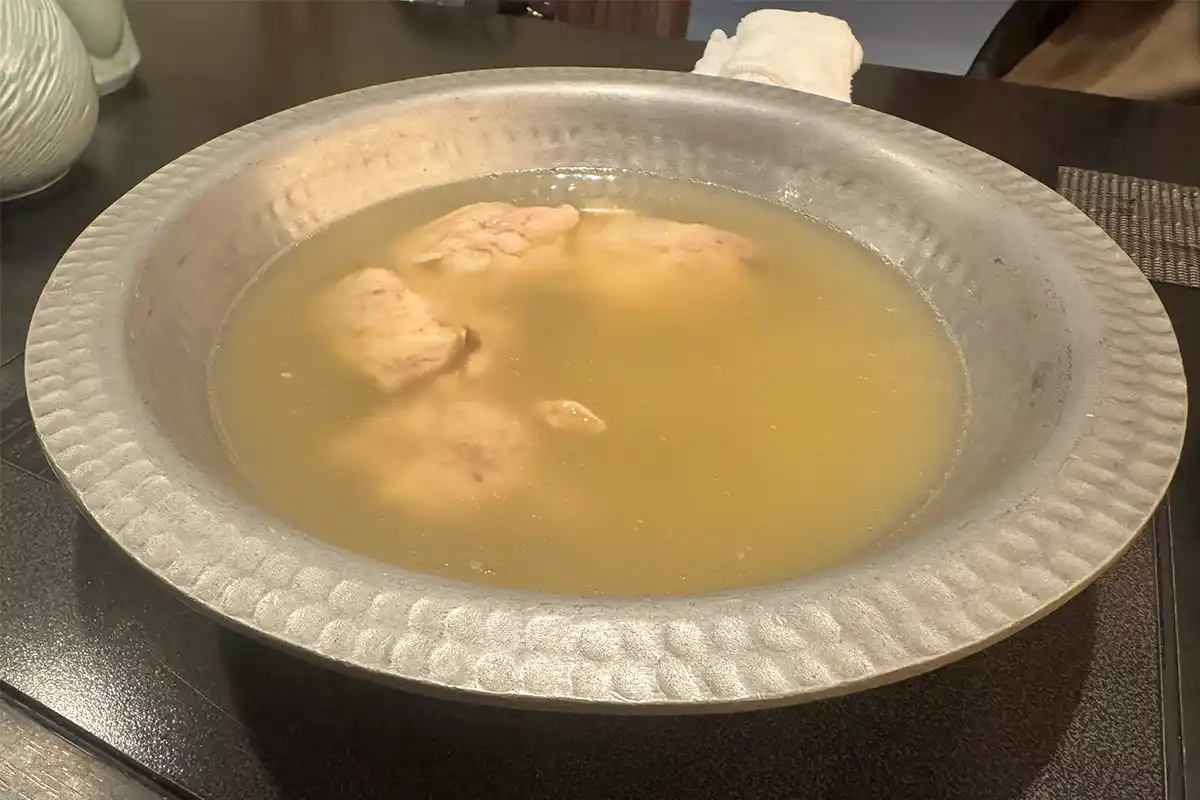
そういう方たちに「どこの店に行くといいよ」っていろいろ教えてもらって、今回は水炊きのお店に行ってきました。
お店は、水炊き料亭 博多華味鳥 博多駅前店でした。
これは多分、福岡の方が地元に帰っても行くお店だと言っていたので、非常にあの有名な名店だという風に聞いております。
水炊きはおいしくて、私は秋田出身なんですけれども、出汁がきりたんぽに似てるんですよね。
非常にコクがあって本当に美味しかったなという風に思います。
もしかしたら福岡の方が秋田に来てきりたんぽを食べたら、もしかしたら好きなのかなという風に思いますね。
福岡といえば、やっぱりラーメン。
有名なのは一風堂さんですよね。
総本店みたいなものがありまして、一風堂さんも行ってみたんですけれども、とんでもない行列ができていて、夏で外で1時間待つのはちょっと厳しいなと思って今回は行かなかったんですけれども、
その代わりにその代わりにラーメンで有名な「博多一幸舎」というお店に行きました。
▶️ 博多一幸舎 Webサイト
ここの豚骨ラーメンはとんでもなく美味しくて非常にコクがあるという。
あとはこの明太子ご飯と小ぶりな餃子ですね。
小ぶりな餃子って本当美味しいですよね!
本当に食を楽しませてもらいました。
4. 博多駅前で出会った衝撃の「飾り山」
街に出てまず度肝を抜かれたのが、博多駅前に設置されていた十番山笠・博多駅商店連合会の「飾り山」です。
建物の2〜3階ほどの高さまで伸びる巨大な飾り山が、博多駅前にどんと鎮座している。
思わず見上げて、「いや、でかすぎるだろ…」と声が出ました。
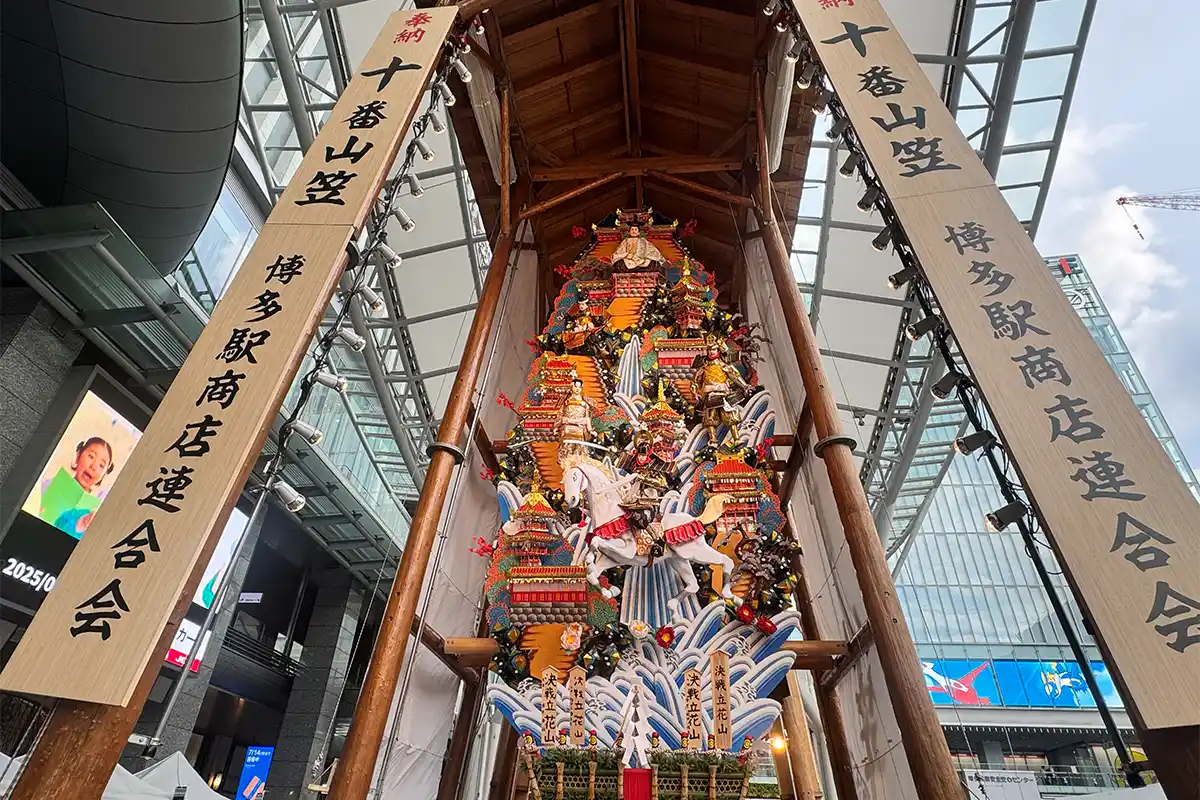
ガラス張りの現代的なビル群と、何百年も続く山笠。
この現代と伝統のコントラストこそが、博多祇園山笠の大きな魅力の一つだと感じました。
5. 山笠のスピードと男たちの体力に圧倒される
初めて観る山笠。
人形も比較的シンプル。
まずは、集団山見せ(13日)、流舁き(14日)を実際に見ていきます。
まず驚いたのはそのスピードです。
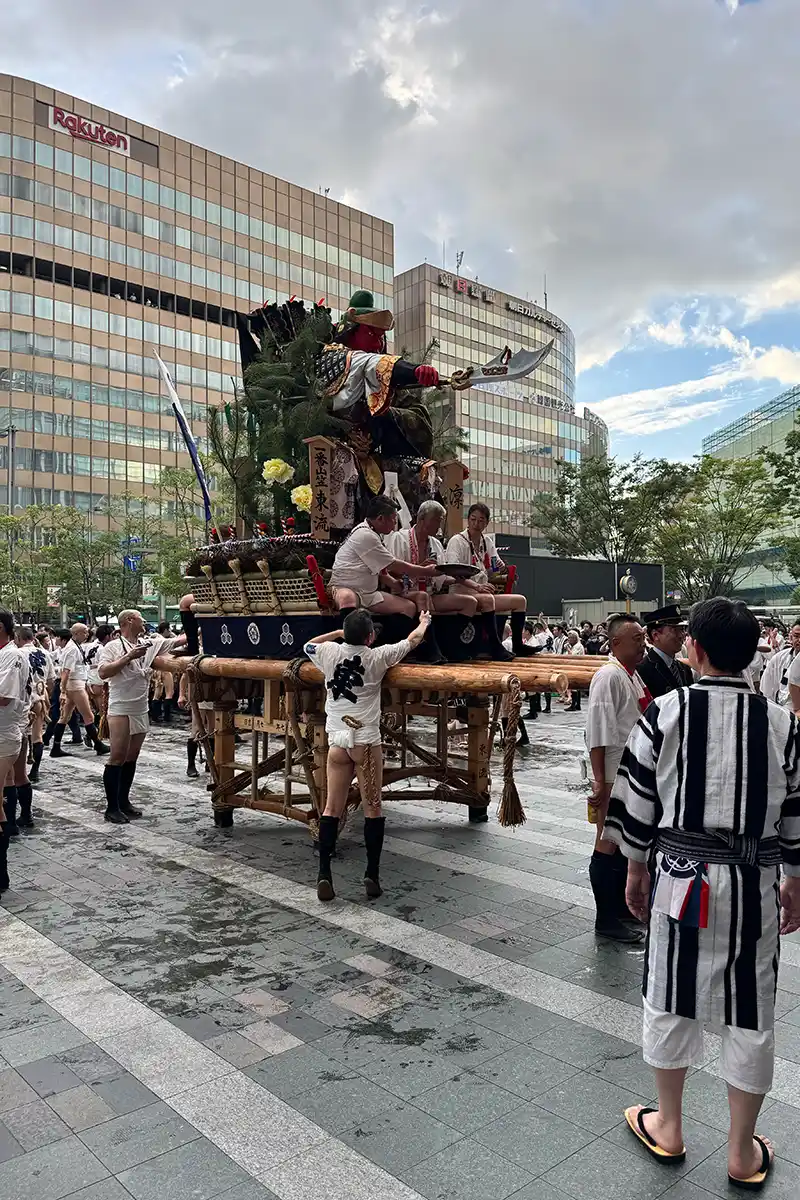
何トンもある山笠を、何十人もの男たちが変わる変わる舁きながら博多の町を疾走する。
そのペースは、私がハーフマラソンで走るペースと大差ありません。
「これを毎年やってるのか…」
そう思うと、この祭りのために1年かけて体を作っている人たちの凄さが、嫌でも伝わってきます。
6. 追い山笠|午前4時59分、神聖な瞬間
最大の見どころである「追い山笠」は、7月15日午前4時59分スタート。
私は前日の夜10時頃から櫛田神社で場所取りに並びました。
正直、何度も「ゆっくり寝てから早寝して行こうかな」と思いましたが、
それでも前日の午後10時ごろから現地いり。
どうしてもこの瞬間を良い場所で見たかったからです。
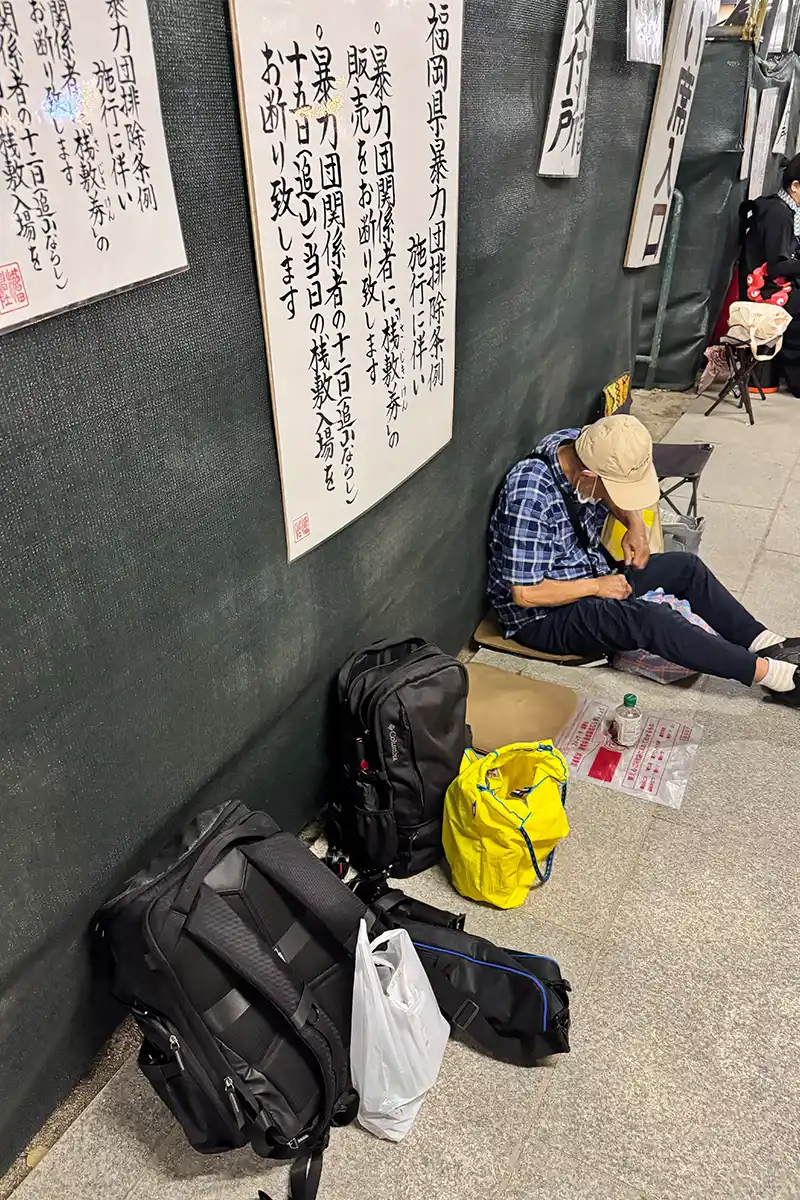
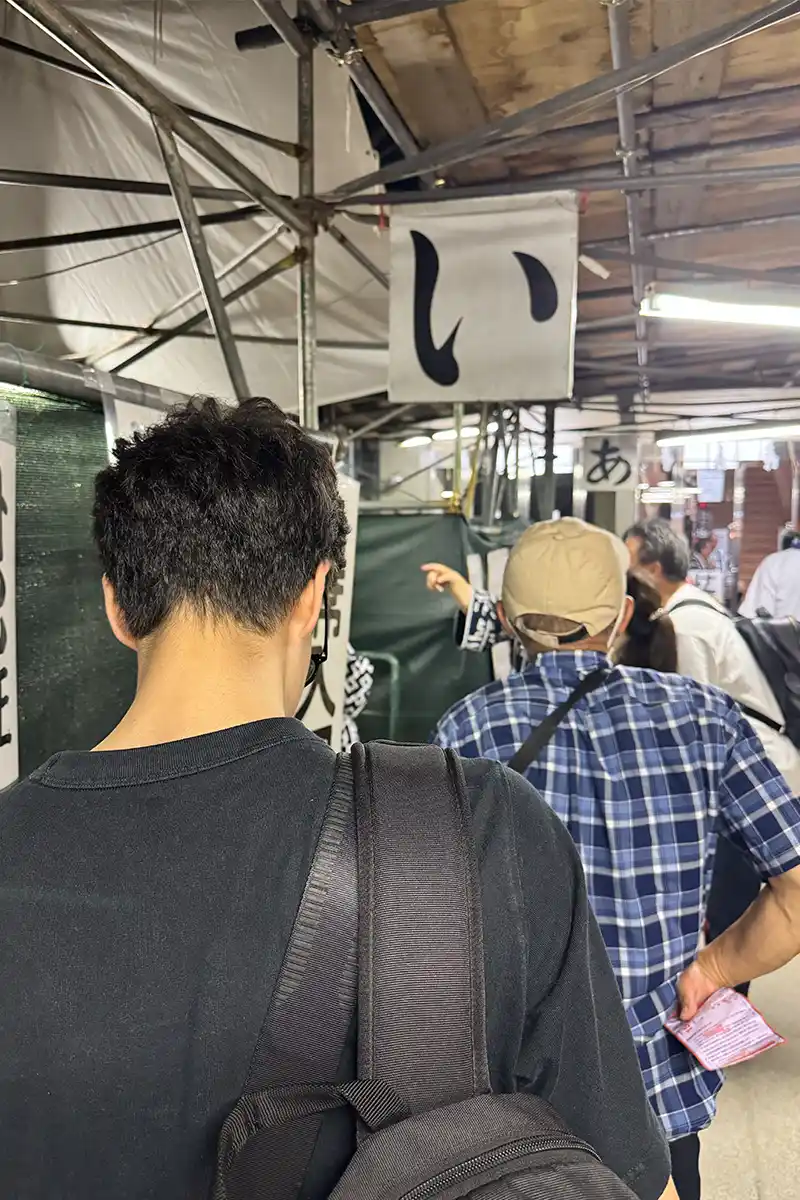
指定エリア内は自由席のようで場所取りみたいなものがありまして、私は前の日の夜10時ぐらい現地の櫛田神社(くしだじんじゃ)に行き
そして、場所取りの列に並びました。
ぶっちゃけ、そんな早く行かなくともと、何度も寝ようかと思ったのですが、どうしてもいい場所で見たくて
老体に鞭をうって、がんばりました。
現地に行くともうすでに2、3名が前に並んでいました。
(これは過去のWeb情報通りでした。)
チケットは、エリア指定になっていて「あ」「い」「う」「え」「お」みたいな形でこのセクションごとのチケットになっているんですね。
そのセクションごとのチケットを持っていると、そのセクションの順番待ちに並ぶことができます。
朝2時に各ゲートがオープンになるんです。
そうすると自分が持っているチケットのセクションのそのエリアの中で、並んでいた順番で座席に座ることができるということになっていました。
そこからは座席を確保し、一旦外に出てコンビニもいけますし、トイレもいけます。
一旦退出カードみたいなものを入り口でもらうわけです。
実は、前日から並んでいる時、本当にいい出会いがありました。
一緒に並んでいる人たちとやっぱりこうね、一夜を共にするというか。
世間話したり、どうして福岡きたかとか。
そこでちょうどカメラをやっている方がいらっしゃって、もう朝までですね、ずっとカメラ談義することができて。
実は、その方があの私のサムネイルを撮ってくれているんです!
なんで写真でしょうか。
本当にいい写真を撮っていただいて、この写真のおかげで私の動画も映えましたし、本当にいい思い出になった。
またね、福岡の地元の方とね、仲良くできる、本当に面白い体験をしたな今でも思っています。
7. 夜明けとともに胸が熱くなる理由
夜中から並んで、どんどんお祭りの時間が近づいていくんですね。
最初あと7時間もか。。。 ゲートが開いて、あと3時間か。 あと1時間、あと40分、あと30分、あと15分!
そして、お祭りが実際にスタートする。
とんでもない緊張感なんですよ。
各町内の方はこの年のこの瞬間に賭けていると。
空気が張り詰めているというか。
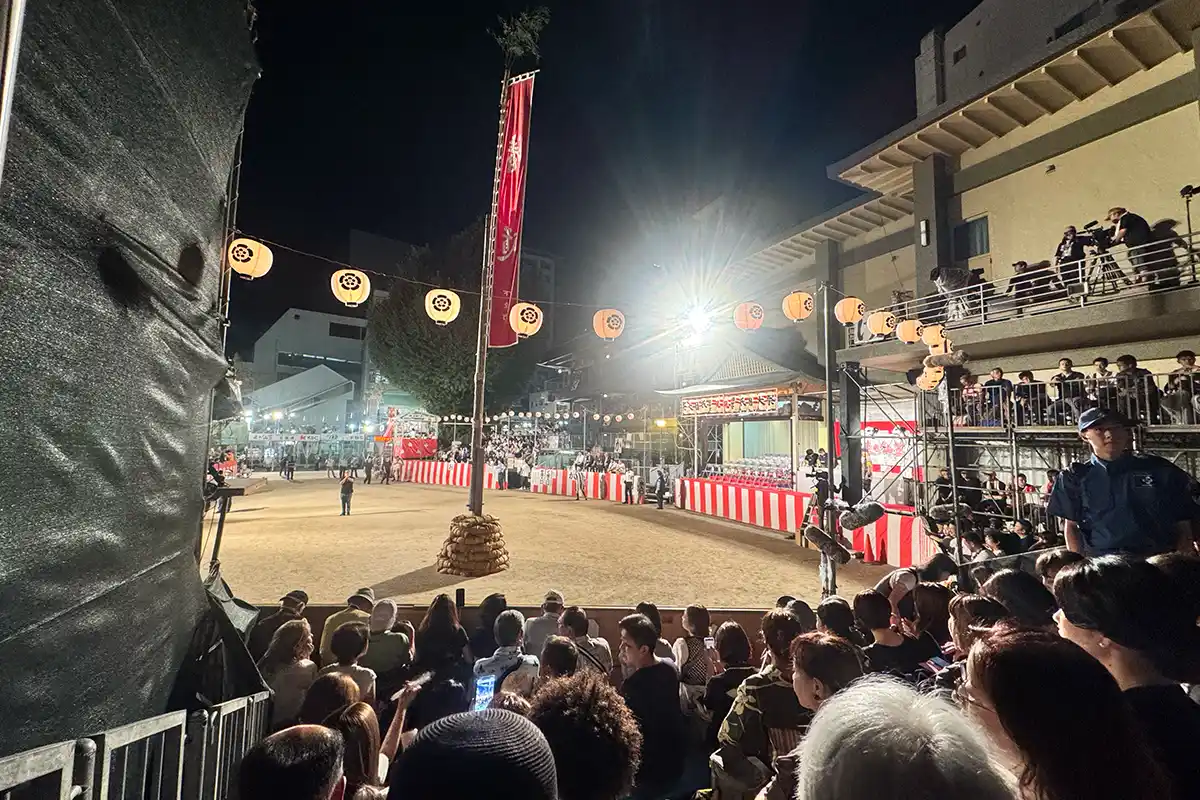
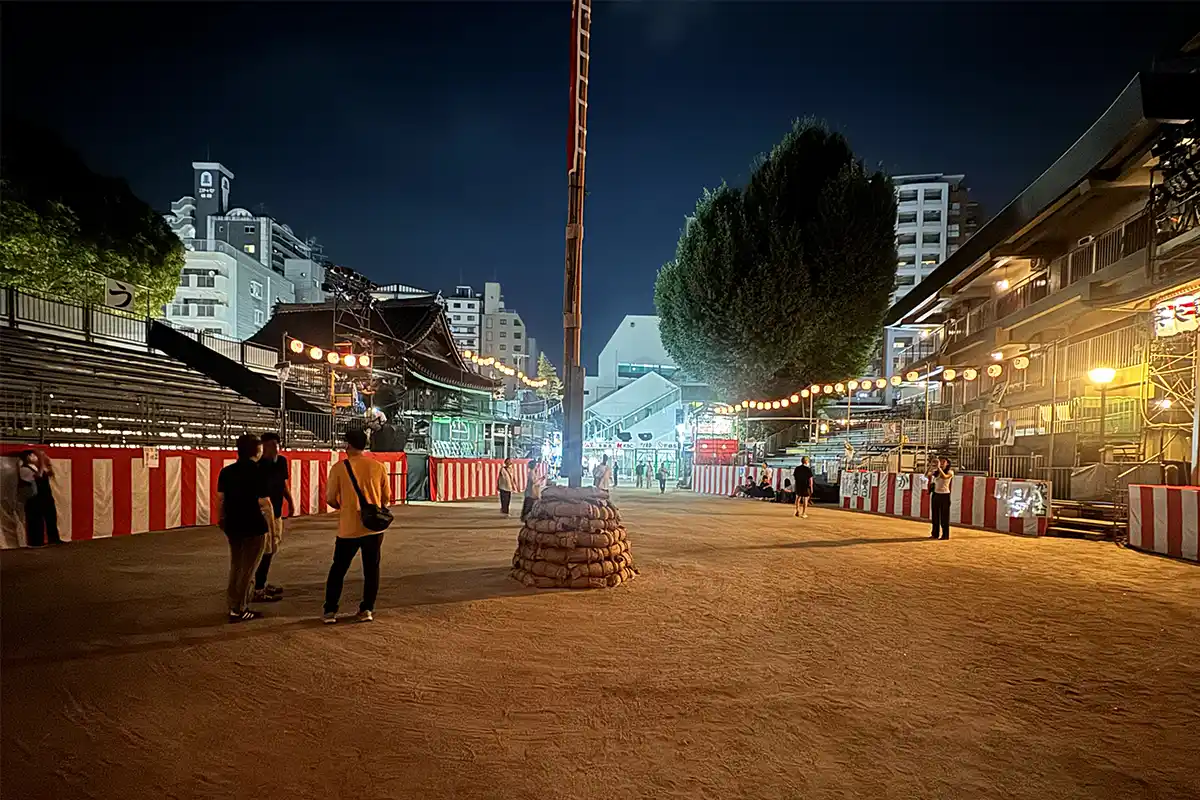
夜明けとともに空が黒からオレンジへと変わっていく中、次々と山笠が櫛田神社へ入ってくる。
見ているだけで、自然と胸が熱くなっていきます。
今年の夏は、もう二度と戻ってこない。
だからこそ、この一瞬一瞬が、強烈に心に焼き付くのだと思います。
開始時間が近づくと節田神社の前に各町内が順番待ちで待機しているんです。
そして、この順番は毎年持ち回りで変わっていくようです。
一番最初にこの櫛田神社に入ってくる町内(今回は東流)、この一番山笠だけが櫛田神社に入ってポールみたいなものがあるんですね。
あの丸太のポールみたいな。
そこを回転した後、櫛田神社のその境内の方々、関係者の方々に向かって祝い歌を歌うことができると。
この瞬間が本当にこうなんですかね、神が舞い降りるというわけじゃないんですけれども、神聖な、本当に神秘的な瞬間でした。
今年いろんなお祭り行った中でも本当に忘れることができない思い出の一つですし、多分もう一生ね、死ぬまで忘れることないんだろうなと思います。
本当にあの空気感ですね。
夏の始まり、あの空気感、そして全員がこの瞬間に賭けるという思い、そんなものが伝わってきたお祭りでした。
8. 映像に残した博多祇園山笠
現地で撮影した映像をYouTubeに残しています。
この映像の中でも、特に00:40 ~から始まる一番山笠の緊張感、空気感を感じてもらいたいです。
ここに全てが詰まってます。
ただ、この動画の裏側には、上に書いたようなストーリーがあります。
全部まるっと楽しんでもらえたらなと思います。

9. お祭り男 / Festival Freakとは? 映像をもっと見たい人へ
お祭り男 / Festival Freakは、日本全国の祭り・花火を現地で撮影し、その空気感・熱量・一瞬の感動を映像として残す活動をしています。
ただ「きれいな映像」を撮るのではなく、
そこに流れる時間・人の想い・その場にしかない空気を伝えることを大切にしています。
この記事を読んで、「博多祇園山笠をもっと見てみたい」「現地の空気を感じたい」と思っていただけたなら、ぜひYouTubeチャンネルも覗いてみてください。
ここまで読んでいただき、本当にありがとうございました。
チャンネルリンク
▶️ https://www.youtube.com/@festivalfreakjapan
The Soul of Hakata Starts to Run — Behind the Scenes of My First On-Site Filming of Hakata Gion Yamakasa
1. Hakata Gion Yamakasa — The Festival I Absolutely Had to See
All across Japan, there are countless major festivals—like the Asakusa Sanja Matsuri and Kishiwada Danjiri Matsuri in Osaka.
I chase multiple festivals every year myself, but among them, Hakata Gion Yamakasa in Kyushu was one I’d heard “it’s insane, it’s incredible” about for a long time.
It was one of those festivals that made me think, “Someday, I have to go—no matter what.”
Hakata Gion Yamakasa is held every year from July 1st to 15th—nearly two full weeks.
This time, I was able to actually see Yamakasa on-site from around July 11th through the 15th.
The entire city of Hakata gets painted in festival colors.
The energy is just unreal.
Just walking around, you can feel how much soul the people of Hakata pour into this festival.
The Yamakasa floats carry gorgeous dolls and move forward using thick, log-like poles—but there’s one decisive difference from a mikoshi.
Yamakasa has a base platform underneath and moves while staying in contact with the ground.
So people don’t say “carry” (担ぐ); they use the word “kaku” (舁く)—to haul, to pull, to drive it forward.
Even that single word made me realize again: Hakata Gion Yamakasa isn’t just an event.
It’s a festival built on long history and culture.
2. What Is Hakata Gion Yamakasa? | Basic Info
- Festival name: Hakata Gion Yamakasa (Hakatagion Yamakasa)
- Dates: Every year from July 1–15 (about two weeks)
- Biggest highlight: “Oiyama” (Oiyamakasa), starting at 4:59 a.m. on July 15
- Feature: Not “carry” but “kaku” (舁く). The float has a base and moves while touching the ground.
- On-site atmosphere: The whole city flips into festival mode. You can feel Hakata’s soul and intensity on your skin.
- Official website:
Hakata Gion Yamakasa Official Site
3. From Akita to Fukuoka: The Start of the Trip and a Small Trouble
I left Akita on July 11 and headed to Fukuoka via Haneda.
…And that’s where a small problem happened.
Because of terminal expansion construction at Haneda Airport, what used to be a shuttle-bus transfer to the satellite terminal had changed into a walking route.
And the walking distance was ridiculous.
It felt like I was walking for about 15 minutes.
As a result, I missed my flight to Fukuoka!!
Well… basically, I simply missed it (lol).
Thankfully, I was able to book another ANA flight the same day, and I made it to Fukuoka safely.
The extra fee was… pretty high. Big hit to the wallet.
From Fukuoka Airport to Hakata is about 10 minutes by subway.
That “so close” access—honestly feels very Fukuoka.
This is what a compact city is.
It’s the kind of city planning other cities should learn from.
3-1. About the Hotel | “Fukuoka Today” I Felt in the Heart of Hakata
As expected, hotels were a bit pricey, but this time I stretched the budget and stayed at an APA Hotel.
These days, APA Hotels feel like they’re in the “luxury zone,” right? Expensive, expensive… sweat sweat.
But when you’re chasing Hakata Gion Yamakasa, “location” is everything.
With the festival schedule moving from morning to night, just having a shorter distance back to the hotel changes how much energy you have left.
Especially for Oiyamakasa, which starts at 4:59 a.m., there’s also the day-before positioning and moving around.
I really felt how important “quality sleep” and “good routes” are.
For anyone curious: it was just under 15,000 yen per night at APA Hotel Hakata Gion Ekimae.
That’s basically Tokyo pricing.
It’s right in front of the station, super convenient, and there’s an underground passage that connects all the way to Hakata Station—
so even when it rains, you can reach Hakata Station via the underground walkway.
(Though if it’s your first time, you’ll probably get lost…)
3-2. About the Food | Mizutaki, Tonkotsu Ramen… Fukuoka Is Just Strong
During my stay, I truly enjoyed Fukuoka—and yeah, Fukuoka food is just amazing.
A lot of people I’ve worked with over the years are from Fukuoka, and honestly, so many of them are charming people I’m still close with.
I asked them for recommendations like “Where should I go?” and this time I went to a mizutaki (chicken hot pot) restaurant.
The place was Hakata Hanamidori (Hakata Station Front Store).
I was told it’s the kind of place locals still go to when they come back home—so I’m guessing it’s a famous, legit classic.
The mizutaki was delicious.
I’m from Akita, and the broth kind of reminded me of kiritanpo—rich, deep, comforting.
It made me think: if someone from Fukuoka came to Akita and tried kiritanpo, they might actually love it.
▶️ Hakata Hanamidori Hakata Ekimae Store Website
And in Fukuoka… it’s gotta be ramen.
The famous one is Ippudo, right?
There’s a “main store” type location, and I tried to go—but the line was insane.
In the summer, waiting outside for an hour felt a bit too brutal, so I skipped it.
Instead, I went to Hakata Ikkousha, another famous ramen spot.
▶️ Hakata Ikkousha Website
The tonkotsu ramen here was unbelievably good—super rich and deep.
And then there was the mentaiko rice, plus those small bite-size gyoza.
Small gyoza are seriously the best, right?
I really got to enjoy food to the fullest.
4. The Shock of My First “Kazariyama” in Front of Hakata Station
The first thing that absolutely blew my mind when I went into the city was the Kazariyama set up in front of Hakata Station—
No.10 Yamakasa (Hakata Station Shopping Street Federation).
A gigantic decorative float stretching up to around the 2nd or 3rd floor of a building was sitting right there in front of the station.
I looked up and couldn’t help saying, “No way… that’s way too big.”
Modern glass buildings—and Yamakasa tradition that’s been alive for centuries.
That contrast between modern and tradition felt like one of the biggest charms of Hakata Gion Yamakasa.
5. Overwhelmed by the Speed of Yamakasa — and the Stamina of the Men
My first time seeing Yamakasa.
The dolls are relatively simple.
This time, I watched the Group Yamakasa Display (July 13) and the Nagare Kaki (July 14) in person.
What shocked me first was the speed.
Dozens of men take turns hauling a Yamakasa that weighs several tons, sprinting through the streets of Hakata.
The pace is not that different from my half-marathon pace.
“Wait… they do this every year?”
When you think about it, you can’t help but respect how these guys build their bodies all year just for this festival.
6. Oiyamakasa | 4:59 a.m., a Sacred Moment
The biggest highlight, “Oiyamakasa,” starts at 4:59 a.m. on July 15.
I lined up at Kushida Shrine from around 10 p.m. the night before to secure a spot.
Honestly, I kept thinking, “Maybe I should just sleep properly and come early…”
But I still went in around 10 p.m. the night before.
Because I absolutely wanted to see this moment from a good place.
Inside the designated area, it’s basically free seating, so there’s a sort of “spot holding” system.
I went to Kushida Shrine around 10 p.m. the night before and joined the line for spot holding.
To be honest, I thought many times, “Maybe I don’t need to come this early…”
But I really wanted a good spot, so I pushed my aging body and did my best.
When I arrived, there were already two or three people ahead of me.
(Exactly like the online info I’d read.)
Tickets are divided by area—like sections “A,” “I,” “U,” “E,” “O,” etc.
If you have a ticket for a certain section, you can line up for that section’s entry order.
At 2 a.m., each gate opens.
Then, within your ticketed section, you can take a seat in the order you lined up.
After you secure your seat, you can temporarily step out—go to a convenience store, use the restroom, etc.
You receive something like a re-entry card at the entrance when you leave.
Actually, while lining up from the day before, I had a really great encounter.
You spend the night together with the people around you—kind of like sharing one night in the same place.
We chatted, talked about why we came to Fukuoka, and all that.
And there was someone there who was into cameras too—
we ended up talking photography all the way until morning.
And the best part:
that person took the photo used for my thumbnail!
It was such a great shot—my video looks better because of it, and it became a memory I’ll never forget.
Even now, I still think it was such a fun experience—getting along with locals in Fukuoka and sharing that night together.
7. Why My Chest Gets Hot as the Dawn Breaks
You line up from the middle of the night, and the festival time gets closer and closer.
“At first… seven hours left.”
Then the gate opens—“three hours left.”
“One hour… forty minutes… thirty… fifteen!”
And then the festival actually begins.
The tension is unreal.
You can feel that every neighborhood is betting everything on this one moment of the year.
The air feels tight—charged.
As dawn breaks and the sky shifts from black to orange, Yamakasa floats start entering Kushida Shrine one after another.
Just watching it—your chest naturally starts to burn.
This summer will never come back again.
That’s exactly why every single moment gets burned into your heart so intensely.
As the start time approaches, each neighborhood waits in order in front of Kushida Shrine.
And that order rotates each year.
Only the first neighborhood to enter the shrine (this time, Higashi-nagare) — the No.1 Yamakasa —
gets to enter, circle around a pole-like wooden post (that thick log-looking one),
and then sing a celebratory song toward the people inside the shrine grounds and the officials.
That moment… it’s not like “a god literally descends,” but it was sacred.
Truly mysterious.
Even among all the festivals I went to this year, it became one of the memories I can’t forget.
Honestly, I think I’ll remember it until the day I die.
That atmosphere—
the beginning of summer,
the feeling that everyone is staking everything on this moment—
Hakata Gion Yamakasa was a festival that made all of that come through, loud and clear.
8. Hakata Gion Yamakasa, Preserved on Video
I’ve left the footage I filmed on-site on YouTube.
In this video, I especially want you to feel the tension and atmosphere starting from around 00:40—
that first Yamakasa moment.
Everything is packed right there.
But behind that video, there’s the story I wrote above.
I hope you’ll enjoy it all—every bit of it.
9. Who Is “Omatsuri Otoko / Festival Freak”? For Those Who Want More Footage
Omatsuri Otoko / Festival Freak travels across Japan to film festivals and fireworks on-site—and preserves the atmosphere, the energy, and those once-in-a-lifetime moments as video.
I’m not just trying to shoot “beautiful footage.”
What I care about is capturing:
the time flowing there, the feelings of the people, and the air that only exists in that place.
If this article made you think, “I want to see more of Hakata Gion Yamakasa,” or “I want to feel what it’s like on the ground,”
please check out my YouTube channel too.
Thank you so much for reading all the way to the end.
Channel link
▶️ https://www.youtube.com/@festivalfreakjapan
この記事へのコメントはありません。