
西馬音内盆踊りとは?死者を弔う幻想の舞と“卑猥地口”の真実【現地撮影レポート】- Nishimonai Bon Odori Explained: The Mysterious Dance for the Dead & Its Hidden Erotic Chants
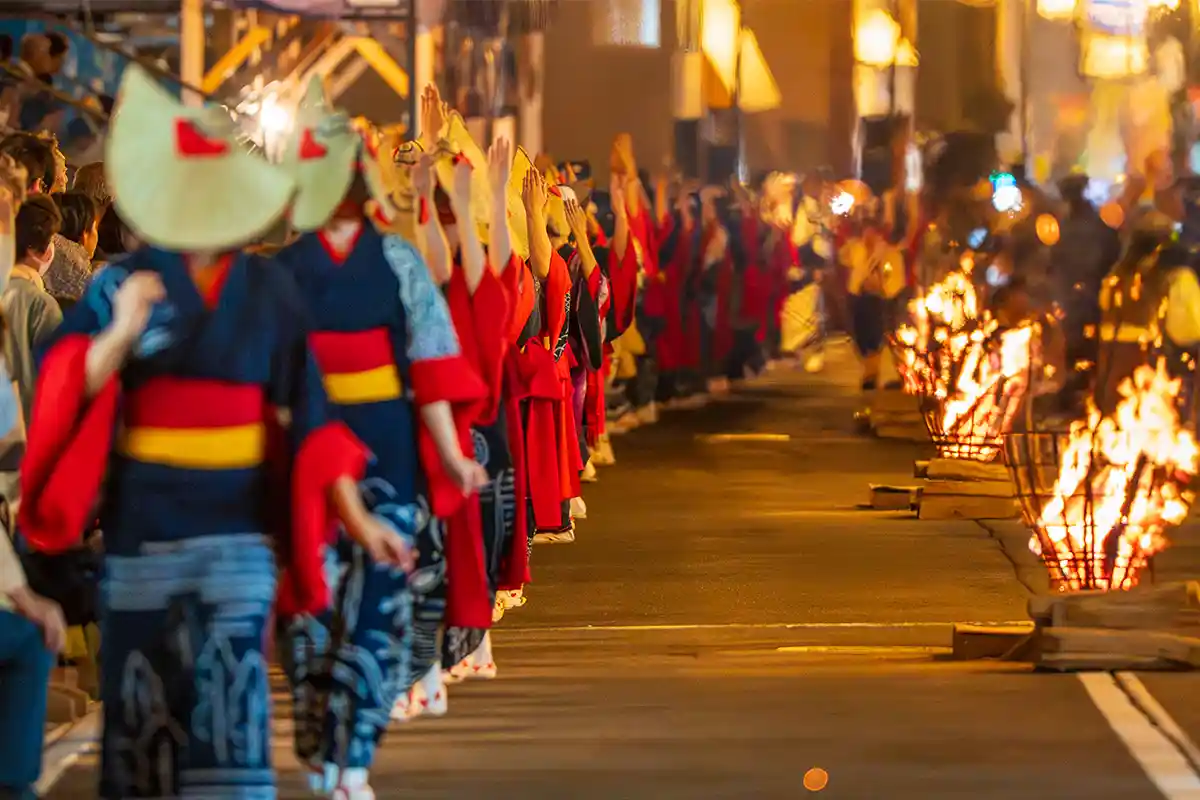
1, 「死者を弔う祭り」。情緒ある異様な雰囲気。
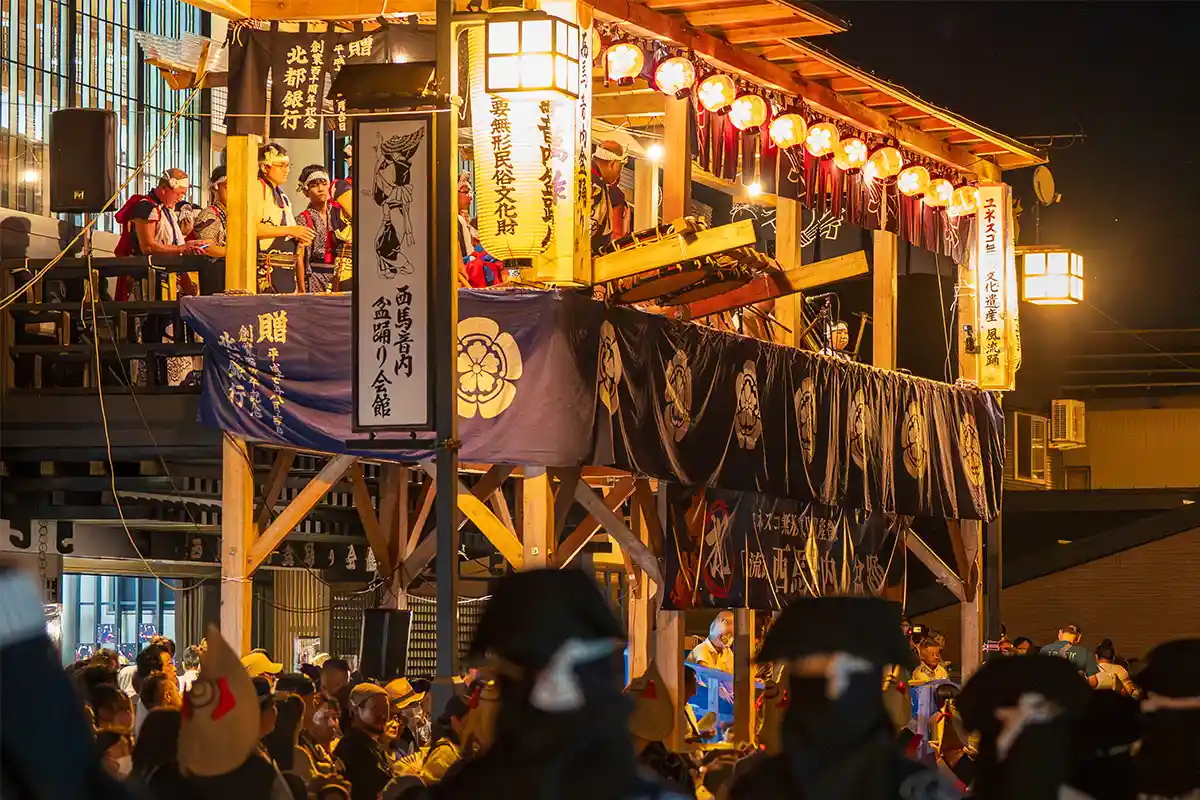
西馬音内(にしもない)の盆踊りは、秋田県羽後町で行われる伝統行事で、700年以上の歴史を持つといわれています。
この盆踊りは、旧暦の七月盆(旧盆)にあたる時期に開催され、もともとは祖先や亡くなった方々の霊を慰め、供養するためのものとされています。
「死者を弔う祭り」としての側面が強いのは、盆踊り自体が古くから日本各地で「お盆」に行われる行事であり、あの世から戻ってくるご先祖様の魂を迎え、送り出す役割を持っているからです。
特に西馬音内の盆踊りでは、踊り手が身にまとう黒い編み笠や端縫い衣装が非常に象徴的で、顔を隠して踊るその姿は、まるで現世とあの世の境界を曖昧にし、亡き人の魂と共に踊るかのような雰囲気を醸し出しています。また、踊りの中には「亡者踊り」と呼ばれるような、静かで哀愁を帯びた動きもあり、これが死者の魂を慰めるための舞であることを物語っています。
このように、西馬音内の盆踊りは単なる夏の行事ではなく、死者への深い敬意と祈りが込められた特別な踊りと言われているようです。
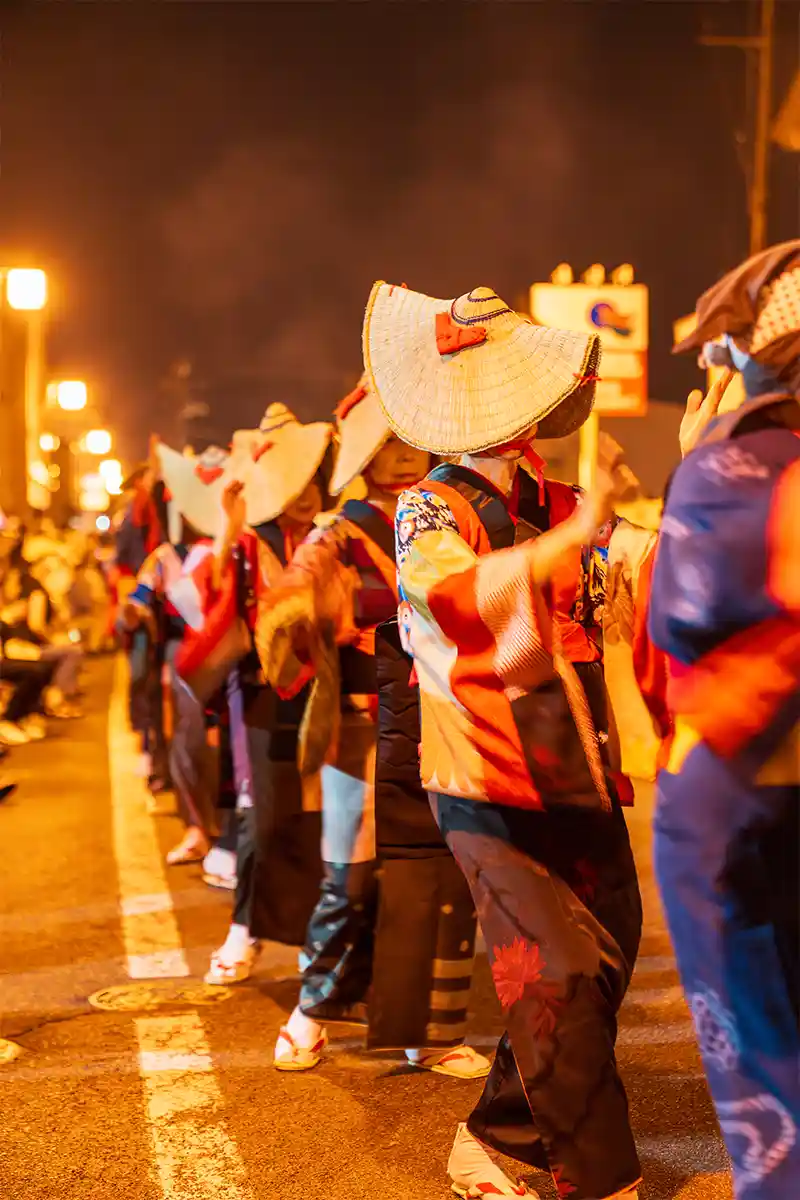
初めて西馬音内を訪れた時を忘れられません。
撮影中もずっと、雰囲気に飲まれていました。
篝火(かがりび : たいまつ的な火🔥)ごしの踊り子。
そして、道路には砂が撒かれ、踊り子の草履と擦れあう時の独特な音。
時に早く、時にゆったりとしたお囃子と音頭上げ。
薄暗い中、夜が深まるにつれ増える踊り子。
カメラ越しに、現実なのか、数百年前へタイムリープしたのかわからなくなる感覚。
今日は、こんな西馬音内(にしもない)の盆踊りの撮影裏となります。
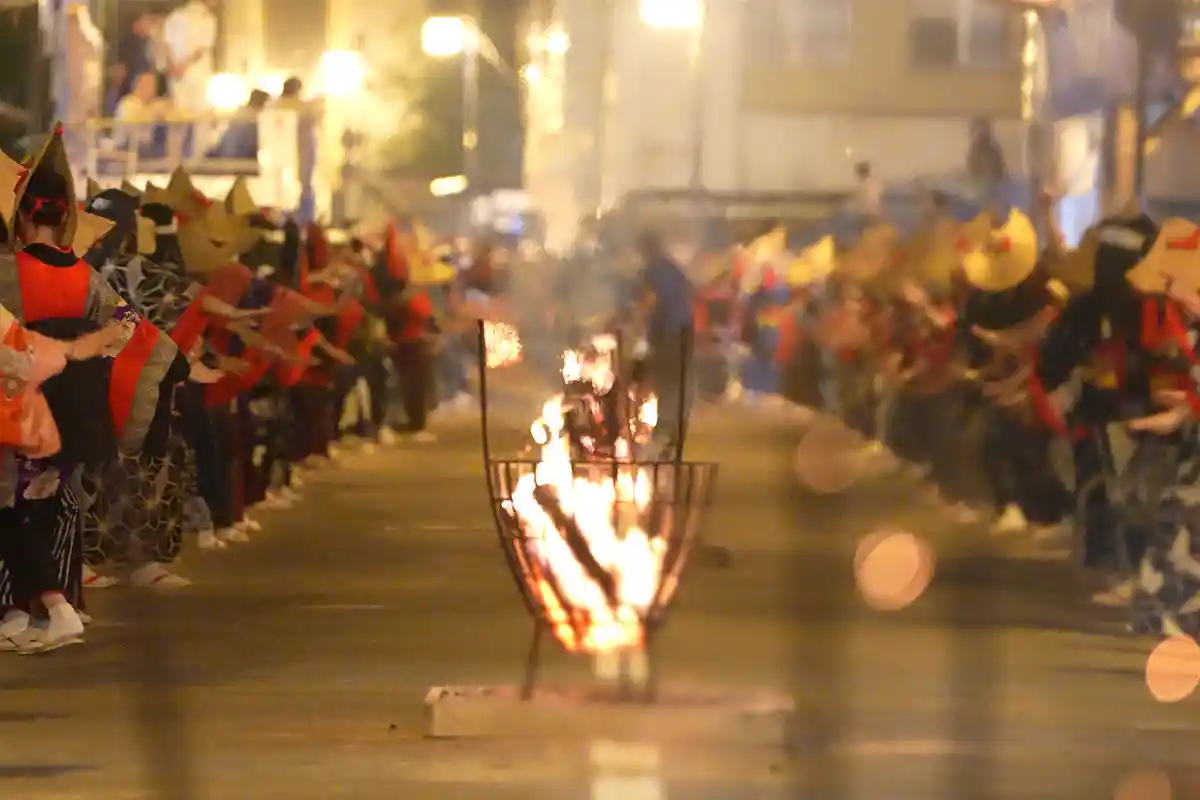
2,西馬音内盆踊り 基本情報
🟦 開催時期:
毎年8月16日から18日までの3日間にわたって開催されます。
🟦 開催場所:
秋田県雄勝郡羽後町西馬音内地区。メイン会場は西馬音内本町通り周辺です。
🟦 アクセス:
JR奥羽本線「湯沢駅」からバスで約30分。
🟦 駐車場: 有料駐車場が周辺であるので、公式サイトをチェック。料金は2025年現在1,000円でした。
🟦 特徴:
国の重要無形民俗文化財に指定されており、黒い編み笠や華やかな端縫い衣装が特徴的。幻想的な雰囲気の中で行われる盆踊りです。
🟦 来場者の雰囲気:
地元の方はもちろん、全国から多くの観光客が訪れ、古き良き日本の夏の情緒を味わいます。最近では海外からのお客様も結構いる感じです。
※県外から電車でくる人は少ないと思いますが、最寄りの湯沢駅からもかなり離れております。
新幹線で盛岡方面から来る場合は、「角館」で下車して、レンタカーが良いかと思います。
東北地方の方であれば、間違いなく車で来るのがいいかなと個人的に思います。
3,日本三大盆踊りについて
西馬音内盆踊りは、徳島県の「阿波おどり」、富山県の「おわら風の盆」と並んで「日本三大盆踊り」と称されます。
* 徳島県:阿波おどり
阿波おどりは400年以上の歴史を持つ徳島の代表的な盆踊りです。毎年8月に開催され、躍動感あふれる踊り手たちが街を練り歩く様子は国内外から多くの観光客を魅了します。
* 富山県:おわら風の盆
富山市八尾地区で行われるおわら風の盆は、哀愁漂う旋律に合わせて踊る静かな盆踊りです。毎年9月初旬に開催され、幻想的な雰囲気が特徴です。
* 秋田県:西馬音内盆踊り
そして秋田県の西馬音内盆踊りは、先ほど述べたように死者を弔う情緒あふれる踊りとして知られています。編み笠や端縫い衣装が特徴で、厳かで静かな雰囲気が漂います。
三大盆踊りと呼ばれる背景
これら三つの盆踊りが「日本三大盆踊り」と呼ばれるようになった正確な時期は定かではありませんが、いずれも江戸時代から昭和初期にかけて地域の文化として根付いていき、次第に全国的に有名になっていったと言われています。それぞれの地域で愛され、長年続いてきたことで、三大盆踊りという称号が定着したと考えられます。
その他の有名な盆踊り
日本各地には他にも数多くの盆踊りがあります。例えば、岐阜県の郡上おどりや、東京の西馬込盆踊りなど、地域ごとに特色ある盆踊りが数多く存在します。
しかし、徳島・富山・秋田の三つの盆踊りは特に歴史や規模、知名度の面で群を抜いており、「三大盆踊り」として広く認知されていると言われているようです。

4,映像で楽しむ西馬音内盆踊り:過去3年分の動画アーカイブ
ここまで読んで「この祭り、映像で体感してみたい」と思った方へ。
西馬音内の盆踊りは、言葉では伝えきれない“空気感”があります。
私は2023年・2024年・2025年と、現地でこの祭りを追い続けてきました。
✅ 編み笠の揺れ
✅ 足音の重なり
✅ 闇に溶ける踊り手
そのすべてを、映像に残しています。
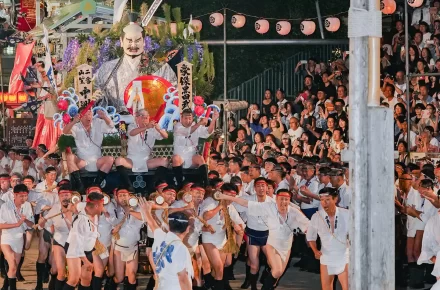
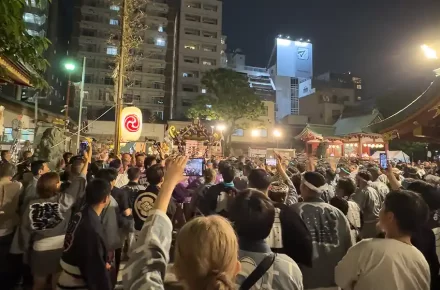
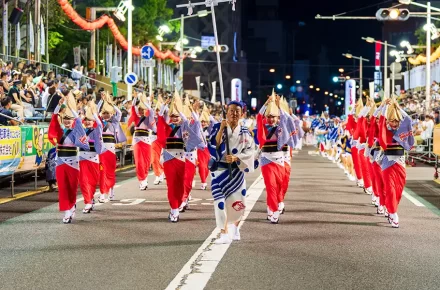
ここでは、私が実際に過去3年間にわたって撮影した西馬音内盆踊りの動画を3本を一気にご紹介します。
ぜひ、ここから実際の西馬音内を体感してみてください。


西馬音内盆踊りの幽玄な舞や、哀愁漂う音色をぜひ映像で感じてみてください。
毎年、撮影場所が異なり、全てご確認いただければ全体像がなんとなくわかるかと思います。
さらに他の年のアーカイブや現地の様子など、もっとたくさんの映像をご覧になりたい方は、ぜひ私のYouTubeチャンネルをチェックしてみてください。
気に入っていただけたらチャンネル登録・応援してもらえれば、今後の活動の励みとなります!
▶️ https://www.youtube.com/@festivalfreakjapan
5,西馬音内盆踊りの楽しみ方:情緒あふれる街と“粋”な歌詞を味わう、そして最後の一体感
西馬音内盆踊りを最大限楽しむためのポイントは、まずこの祭り独特の“情緒”を感じることです。
普段は静かな小さな町が、祭りの日には一変します。西馬音内本町通りには篝火が並べられ、徐々に踊り子たちが集まり、通り全体が独特の雰囲気に包まれていきます。
この変貌ぶりこそが、西馬音内盆踊りの大きな魅力の一つです。
まさに町全体が祭りの舞台となり、その情緒に身を任せることで、訪れた人は日常とは違う特別な時間を味わうことができます。
そして二つ目の楽しみ方は、この祭りで歌われる“粋な歌詞”に注目することです。
西馬音内盆踊りの歌詞は、秋田音頭に似た民謡調で、時に少し下世話でユーモラスな表現も含まれています。
こうした“ちょっと下品”とも言える歌詞が、この盆踊りの楽しさを一層引き立て、見る人を笑顔にしてくれます。
事前にこうした歌詞の背景を知っておくと、実際に現地でその歌詞が流れたときに「ああ、これがあの歌詞か」とさらに深く楽しむことができるはずです。
私も秋田弁は難しすぎて何を言っているかわからないので、事前予習必須ですw
そして、西馬音内盆踊りを存分に楽しむための3つ目のポイントは、祭りの最後に訪れる特別な瞬間です。
各日の盆踊りが終わった後、太鼓やお囃子を演奏する人々、歌い手、踊り子、そして観客が一体となって、最後の盛り上がりを迎えます。
このフィナーレの瞬間は、お囃子のテンポが一気に上がり、まるでライブコンサートさながらの熱気に包まれます。
毎年のように起こるアンコールコールも、この祭りならではの楽しみ。
「まだ終わりたくない」
「もう一曲だけ楽しみたい」
という観客の笑顔と熱気が会場を包み、最後まで残った人だけが味わえる特別な一体感が生まれます。
この最後の瞬間は、まさにこの祭りのハイライトの一つ。
時間に余裕がある方は、ぜひ最後まで残ってその雰囲気を楽しんでみてください。
この様子は動画にも収めてありますので、ぜひご覧いただき、現地の空気を感じていただければと思います。
調査したところ、西馬音内盆踊りの歌詞(地口)には、おっしゃる通り非常に過激でエロティック(下品)な内容が多数含まれています。
これらは**「卑猥地口(ひわいじぐち)」**と呼ばれ、かつての農村社会において、祭りの熱狂の中で抑圧された欲望を解放し、子孫繁栄を願う一種のエネルギーとして歌われてきました。
現代の公的な観光パンフレットやテレビ番組では「美しい歌詞」だけが紹介されますが、現場の踊り手や唄い手の間では、今もこれらが生々しく語り継がれています。
ブログ記事に使える、代表的でインパクトのある「下品な歌詞」をいくつか抽出しました。
代表的な「卑猥地口」の内容 西馬音内盆踊りの唄には定型がなく、七・七・七・五の調子に乗せて、その場のノリで卑猥な言葉を即興的に挟み込む文化があるようです。
🟦「おら家のばさまの 屁のひりようは 二階に響いて 一階ゆする」
(意訳:うちのばぁちゃんの屁(おなら)の勢いはすごくて、二階から一階を揺らすほどだ)
※まだ序の口ですが、生活感のある下品さです。すばらしい。家が揺れるのを想像すると草です。
🟦「おら家のばさまの 干し餅は 股に挟んで 湯でふかす」
(意訳:うちのばあさんは干し餅を股に挟んで、体温と蒸れで柔らかくする)
※完全にOUTと思いますが、とても下品で素晴らしいです!
🟦「おら家のじさまの あそこ(陽物)は 三里四方まで 影が差す」
(意訳:うちのじいさんのイチモツは、12km四方に影を落とすほど巨大だ)
※じいちゃん!現役すぎて、尊敬です!
🟦「一の鳥居で 手を握り 二の鳥居で 腰を抱き 三の鳥居で ……」
(意訳:神社の参道を進むにつれて性的な行為に及んでいく様子をカウントアップするもの)
※夜這い文化が色濃く残っていた時代の名残です。
あとは、私が現地で聞いていて下品!と思ったのは、学校の先生の金玉がどうのこうの。。。。という歌詞があったような。
聞いていて、うわ〜、めちゃ下品と感じたのを覚えております。
この下品さと、踊りのしなやかさ、街の厳かな雰囲気、このコントラストこそ、西馬音内と私は感じております。
ちなみに、男性の陰部のことを、秋田弁では「ガモ」ということがあります。
※これは、かなり低俗というか、下品な表現ですので、使用には十分ご注意くださいませ。
6, 来年行く人向けのチケット購入・注意点ガイド
1. 当日券チケットの購入方法と有料席の種類
西馬音内盆踊りでは、当日券が販売されます。
販売場所は「西馬音内盆踊り会館」で、祭りの行われるメインの通り沿いに位置していてとてもわかりやすい場所です。
チケットの種類としては、「パイプ椅子席」や「仕切り台」と呼ばれる木製の長いすタイプの席があります。
特におすすめなのは仕切り台で、約3人ほどが腰掛けられ、お囃子を正面から見られるエリアに配置されているため、非常に見栄えが良いです。
* 仕切り台料金:1台7,000円(現金のみ)
▶️ 公式Webサイト : リンクはこちらから
2. 当日券が買える場所
町の中心部にある「西馬音内盆踊り会館」1Fの特設ブースで、当日午後4時から販売開始となります。
私は、心配して30分ほど前に並んでおりましたが、それでも20人ほど先客がいることもあるので、良い席を確保したい場合は早めに行くことをおすすめします。
チケットが買えないということはないと思います。(2025年現在)
そして、チケットがなくとも、後ろの方からでも無料でも十分楽しめると思います。
私は、地域貢献とYouTube収益の還元事業として、毎年チケット代として奉納させてもらっております。
3. 現地での注意点と駐車場情報
チケットは現金のみで、クレジットカードは使えませんのでご注意ください。
また、公共交通機関での来場が推奨されていますが、会場付近には有料駐車場もあります。
私がよく利用する「羽後中学校」の駐車場は会場から約200mほどで、1台1,000円で駐車可能です。駐車場は毎年200台ほど停められ、夕方に行けば比較的余裕があることが多いですが、満車になる場合もあるので時間には余裕を持って行くと安心です。
4. 詳細情報は公式リンクで確認
詳細なチケット情報や販売方法は、公式の案内ページ(令和7年度西馬音内盆踊り有料席当日券の販売について)を参考にしてください。
▶️ 公式Webサイト : リンクはこちらから
4,カメラで撮影される方へ
映像をご確認いただければわかるとおり、現地はかなり薄暗いエリアが多いです。
そして、お囃子周辺は非常に明るく、明暗差がかなりある現地となります。
F値の低いレンズがあれば、1本忍ばせておくと、良いかと思われます。
また、篝火があるため、レンズをあまり近づけないようにしないと、レンズのコーティングが禿げてしまいます。
禿げるのは頭だけでいいのかなと思いますので、ご注意ください。
5,ご当地グルメ
たぶんレストラン情報を検索すると「弥助そばや」が出てくると思います。
非常に美味しく人気のお蕎麦屋さんですが、お祭り期間はかなり混み合います。
ランチタイムで、お腹ぺこぺこの状態ですと、お店の前に行列が出来ていて、待ち時間30以上というのも結構あるようです。
私が行った時は行列で、諦めましたw
もしどうしてもこのそばを食べたい場合は、秋田市にも支店があります。
仮に宿泊が秋田市だったり、前の日秋田に前泊だったりする場合は、こちらで食べても美味しいので念の為。
お祭り男 / Festival Freak とは?
ここまで読んでくださって、本当にありがとうございます。
私は、全国各地の祭りや花火大会を追いかけて撮影している「お祭り男 / Festival Freak」です。
夏の花火だけでなく、西馬音内盆踊りのような“静かな熱狂”を秘めた祭りにも惹かれて、毎年のようにカメラを担いで現地に足を運んでいます。
西馬音内盆踊りに関しても、ここ数年連続で通い続け、同じ通り・同じ場所でも、年ごとに少しずつ変わっていく空気の違いを、映像と音で残してきました。
・篝火に照らされた端縫い衣装の色
・笠の向こうにかすかに見える踊り手の表情
・地口の中に紛れ込む、ちょっと下世話で、でもどこか愛おしい言葉たち
そういったものを、できるだけ“そのまま”の空気感でお届けしたいと思っています。
このブログは、YouTubeだけでは伝えきれない「背景」や「行く前に知っておきたいこと」「現地でのリアルな感覚」を補うための場所です。
映像だけではなく、言葉としても祭りの魅力を残していきたい。
そんな思いで、この記事を書いています。
映像でさらに深く味わいたい人へ
もしこの記事を読んで、
「いつか西馬音内盆踊りに行ってみたい」
「実際の音や雰囲気をもっと感じてみたい」
と少しでも思っていただけたら、上でご紹介した3本の動画を、ぜひじっくりご覧になってみてください。
・本町通りを埋め尽くす笠と端縫い衣装の波
・太鼓と唄が重なり合う、あの独特のリズム
・終盤、テンポが一気に上がり、観客と踊り手がひとつになるフィナーレの空気
現地で感じた「熱」と「余韻」を、そのまま画面越しに届けられるように撮影しています。
「現地に行く前の予習」として見るのも良し。
「行ったあとの思い出の追体験」として振り返るのも良し。
どちらの楽しみ方でも、きっと西馬音内盆踊りをもう一段深く味わっていただけるはずです。
もし、どれか一本でも
「この雰囲気、好きだな」
「いつか生で見てみたい」
と感じていただけたら、ぜひチャンネル登録や高評価、コメントで応援してもらえたら嬉しいです。
あなたの一つひとつのリアクションが、次の撮影への大きな励みになりますし、まだこの祭りを知らない誰かに、西馬音内盆踊りの魅力が届くきっかけにもなります。
これからも、日本各地の祭りや花火、そして西馬音内盆踊りのような“心に残る夜”を、映像と文章の両方で発信していきます。
ぜひまた、ブログとYouTubeの両方でお付き合いいただければ幸いです。
チャンネルリンク
▶️ https://www.youtube.com/@festivalfreakjapan
1. “A Festival to Mourn the Dead” – A Poetic, Otherworldly Atmosphere
Nishimonai Bon Odori (Nishimonai Bon Dance) is a traditional event held in Ugo Town, Akita Prefecture, and is said to have a history of more than 700 years.
The festival takes place around the period of the old lunar Obon (the seventh month in the old calendar) and was originally performed to console and honor the spirits of ancestors and the deceased.
The reason it is often described as “a festival to mourn the dead” is that Bon dances across Japan have long been held during Obon, a time when the souls of ancestors are believed to return from the other world. The dance welcomes those souls, spends time with them, and then sends them back again.
In Nishimonai Bon Odori in particular, the dancers’ black braided hats and colorful “hanui” patchwork costumes are deeply symbolic. Dancing with their faces hidden, they seem to blur the boundary between this world and the next, creating the feeling that they are dancing together with the spirits of the dead.
Within the dance there are also motions sometimes referred to as “Moja Odori” (dance of the dead), with quiet, melancholy movements that clearly express the intention of consoling departed souls.
In this way, Nishimonai Bon Odori is not just another summer event; it is often said to be a special dance filled with deep respect and prayers for those who have passed away.
I’ll never forget the first time I visited Nishimonai.
Even while filming, I was completely swallowed up by the atmosphere.
Dancers moving in front of flickering bonfires (kagaribi – torch-like flames 🔥).
Sand scattered on the road, creating that unique sound as it rubs against the dancers’ sandals.
The music and chant that sometimes quicken and sometimes slow down.
The number of dancers gradually increasing as the night deepens in the dim light.
Looking through the camera, I genuinely couldn’t tell if I was in the present or had slipped back several hundred years.
Today’s article is all about the behind-the-scenes of filming this Nishimonai Bon Odori.
2. Basic Information About Nishimonai Bon Odori
🟦 When It’s Held:
The festival takes place every year over three days, from August 16 to 18.
🟦 Location:
Nishimonai district, Ugo Town, Ogachi-gun, Akita Prefecture. The main venue is around Nishimonai Honmachi Street.
🟦 Access:
About 30 minutes by bus from JR Ou Main Line “Yuzawa Station.”
🟦 Parking:
There are paid parking lots in the surrounding area, so please check the official website. As of 2025, the fee was 1,000 yen per car.
🟦 Features:
It is designated as an Important Intangible Folk Cultural Property of Japan. The black braided hats and vivid hanui patchwork costumes are iconic, and the entire Bon dance is performed in a dreamlike, otherworldly atmosphere.
🟦 Visitors & Vibe:
Of course, many locals attend, but people from all over Japan also come to savor the nostalgic feel of an old-fashioned Japanese summer. In recent years there have also been quite a few visitors from overseas.
Not many people come by train from outside the prefecture, and even from the nearest Yuzawa Station it’s still a fair distance. If you’re coming from the Morioka side by Shinkansen, I personally recommend getting off at “Kakunodate” and renting a car. For those living in the Tohoku region, coming by car is, in my opinion, definitely the best option.
3. About Japan’s Three Great Bon Odori
Nishimonai Bon Odori is counted as one of “Japan’s Three Great Bon Odori,” alongside “Awa Odori” in Tokushima Prefecture and “Owara Kaze no Bon” in Toyama Prefecture.
* Tokushima Prefecture: Awa Odori
Awa Odori is Tokushima’s representative Bon dance and has a history of more than 400 years. Held every August, the sight of energetic dancers parading through the streets captivates visitors from all over Japan and abroad.
* Toyama Prefecture: Owara Kaze no Bon
Held in the Yatsuo district of Toyama City, Owara Kaze no Bon is a quiet Bon dance performed to a wistful, haunting melody. It takes place in early September, and its atmosphere is famously ethereal and mysterious.
* Akita Prefecture: Nishimonai Bon Odori
As mentioned earlier, Nishimonai Bon Odori in Akita is known as a deeply emotional dance that consoles the spirits of the dead. The braided hats and hanui patchwork costumes are distinctive, and the entire scene is steeped in a solemn, quiet mood.
Background of the “Three Great Bon Odori”
No one knows exactly when these three Bon dances first started being called “Japan’s Three Great Bon Odori,” but it’s said that from the Edo period through the early Showa era, they each took root as regional cultural traditions and gradually became famous nationwide.
Because they have been cherished and passed down in their respective regions over so many years, the label “Three Great Bon Odori” eventually stuck.
Other Famous Bon Odori
There are many other Bon dances across Japan. For example, Gujo Odori in Gifu Prefecture and various Bon dances in Tokyo (such as those in Nishi-Magome) all have their own local character and charm.
However, the three Bon dances of Tokushima, Toyama, and Akita stand out in terms of history, scale, and recognition. For that reason, they are widely acknowledged as “Japan’s Three Great Bon Odori.”
4. Experience Nishimonai Bon Odori Through Video: Three Years of Archives
If you’ve read this far and thought, “I want to experience this festival through video,” this part is for you.
Nishimonai Bon Odori has a certain “atmosphere” that words alone can’t fully convey.
I’ve been following this festival on-site for three years in a row now: 2023, 2024, and 2025.
✅ The sway of the braided hats
✅ The layering of footsteps
✅ Dancers melting into the darkness
I’ve tried to capture all of that on video.
Here, I’ll introduce three videos of Nishimonai Bon Odori that I’ve filmed over the past three years.
Please use these as your way to experience the real Nishimonai for yourself.
Please feel free to immerse yourself in the ethereal dancing and bittersweet melodies of Nishimonai Bon Odori through these videos.
I film from different positions each year, so if you watch all of them, I think you’ll gradually get a sense of the entire layout and atmosphere.
If you’d like to see even more footage – archives from other years, scenes from around town, and so on – please check out my YouTube channel as well.
If you enjoy the videos, a channel subscription or any kind of support would really encourage me in my future work!
▶️ https://www.youtube.com/@festivalfreakjapan
5. How to Enjoy Nishimonai Bon Odori: A Poetic Town, “Chic” Lyrics, and the Final Sense of Unity
To get the most out of Nishimonai Bon Odori, the first key point is to really soak in the festival’s unique sense of “poetic atmosphere.”
On normal days it’s a quiet, small town, but everything changes during the festival. Bonfires are lined up along Nishimonai Honmachi Street, dancers gradually gather, and the entire street becomes wrapped in a very special mood.
This transformation is one of the festival’s biggest charms.
The whole town turns into a stage, and by simply letting yourself drift along with that atmosphere, you can experience a time that feels completely different from everyday life.
The second way to enjoy the festival is to pay close attention to the “chic” lyrics sung during the dance.
The lyrics of Nishimonai Bon Odori are in a folk-song style similar to Akita Ondo, and sometimes include slightly crude, humorous expressions.
These “kind of dirty” lyrics actually heighten the joy of the festival and bring smiles to the faces of those listening.
If you learn a bit about the background of these lyrics beforehand, then when you hear them live in Nishimonai, you’ll be able to think, “Ah, this is that lyric!” and enjoy the experience on a deeper level.
As for me, Akita dialect is so difficult that I honestly can’t catch everything, so some pre-festival study is absolutely essential for me, lol.
The third key point for fully enjoying Nishimonai Bon Odori is the special moment that comes at the very end of the night.
After the Bon dance finishes each day, the drummers and musicians, the singers, the dancers, and the audience all become one, and the festival reaches its final climax.
During this finale, the tempo of the music suddenly speeds up, and the atmosphere becomes almost like a live concert.
The encore calls that happen almost every year are one of the unique pleasures of this festival.
“I don’t want this to end yet.”
“I just want one more song.”
The smiles and energy of the crowd fill the venue, and a special sense of unity arises that only those who stay until the very end can experience.
This final moment is truly one of the highlights of the entire festival.
If your schedule allows, I strongly recommend staying until the very end to enjoy that atmosphere.
I’ve captured these scenes on video as well, so I hope you’ll watch them and feel the on-site energy through the screen.
When I did some research, I found that the lyrics (jiguchi) of Nishimonai Bon Odori really do include many extremely bold and erotic (downright dirty) lines.
These are called “hiwai jiguchi” (obscene wordplay), and in former rural society they were sung in the heat of the festival as a way of releasing repressed desires and praying for fertility and prosperity.
Modern tourism brochures and TV programs only introduce the “beautiful” lyrics, but among local dancers and singers, these raw, earthy verses are still passed down.
Here are some representative “dirty lyrics” that are strong enough to be used in a blog article and leave an impression:
Representative “hiwai jiguchi” (obscene lines)
The lyrics of Nishimonai Bon Odori don’t really have fixed patterns; instead, there’s a culture of improvising obscene phrases on the spot, fitting them into the 7–7–7–5 rhythm.
🟦「おら家のばさまの 屁のひりようは 二階に響いて 一階ゆする」
(Approximate meaning: “My grandma’s farts are so powerful they shake the first floor from the second.”)
This is still just the warm-up, but it’s wonderfully crude and full of life. If you imagine the house literally shaking, it’s honestly hilarious.
🟦「おら家のばさまの 干し餅は 股に挟んで 湯でふかす」
(Approximate meaning: “My grandma softens dried rice cakes by holding them between her thighs and steaming them with body heat.”)
Totally over the line, but in the best possible way — it’s amazingly and shamelessly dirty.
🟦「おら家のじさまの あそこ(陽物)は 三里四方まで 影が差す」
(Approximate meaning: “My grandpa’s ‘thing’ is so big that it casts a shadow over three ri (about 12 km) in every direction.”)
Grandpa is way too powerful here — honestly, you can’t help but respect him.
🟦「一の鳥居で 手を握り 二の鳥居で 腰を抱き 三の鳥居で ……」
(Approximate meaning: “At the first torii gate they hold hands, at the second gate he holds her waist, and by the third…”)
This reflects the old “night visiting” culture, where things escalated as you passed through the shrine’s gates.
And then there was one line I heard on-site that made me think, “Wow, that’s seriously dirty!” — something along the lines of a school teacher’s testicles and whatnot. I still remember thinking, “Ok, that’s pretty outrageous,” as I listened.
For me, this contrast — the obscene lyrics, the graceful dancing, and the solemn atmosphere of the town — is exactly what makes Nishimonai so fascinating.
By the way, in Akita dialect, there are times when the male genitals are referred to as “gamo.”
Please be aware that this is a very vulgar expression and use it with extreme caution.
6. Ticket Guide & Important Notes for Those Planning to Visit Next Year
1. How to Buy Same-Day Tickets & Types of Paid Seats
Same-day tickets are available for Nishimonai Bon Odori.
They’re sold at the “Nishimonai Bon Odori Hall,” which is located along the main festival street and is very easy to find.
Types of tickets include pipe-chair seating and wooden “shikiridai” benches.
I especially recommend the shikiridai: each bench seats about three people and is placed in an area facing the music and drumming, offering a fantastic view.
* Shikiridai price: 7,000 yen per bench (cash only)
▶️ Official website (PDF): Click here for the link
2. Where You Can Buy Same-Day Tickets
Same-day tickets go on sale at 4:00 p.m. at a special booth on the first floor of the Nishimonai Bon Odori Hall in the center of town.
I was nervous about missing out, so I lined up about 30 minutes early, and even then there were around 20 people ahead of me. If you want to secure a really good seat, I’d recommend going early.
I don’t think tickets will sell out to the point that you can’t get one at all (as of 2025). And even without a ticket, you can still enjoy the festival plenty from farther back for free.
For me, buying a ticket every year is a way to contribute locally and “give back” a little from my YouTube revenue.
3. On-Site Notes & Parking Information
Tickets are cash only — credit cards are not accepted, so please be prepared.
Public transportation is officially recommended, but there are paid parking lots near the venue.
The parking lot I often use is at “Ugo Junior High School,” about 200 meters from the main area, and costs 1,000 yen per car. Around 200 cars can park there each year. If you arrive in the evening, there’s usually still some space, but it can fill up, so it’s best to give yourself extra time.
4. Check Official Links for Detailed Information
For more detailed information on tickets and how they’re sold, please refer to the official page “Regarding Same-Day Sales of Paid Seats for Nishimonai Bon Odori (Reiwa 7).”
▶️ Official Website: Click here for the link
4. For Those Filming with Cameras
As you can see in the videos, many parts of the venue are very dimly lit.
At the same time, the area near the music and drums is quite bright, so the contrast between light and dark is pretty extreme.
If you have a fast lens with a low f-number, I recommend bringing at least one — it will really help.
Also, because of the bonfires, be careful not to bring your lens too close; otherwise, the coating can get damaged.
It’s more than enough if just your head goes bald — you don’t want your lens to “go bald” too, so please be careful.
5. Local Food
If you search for restaurant information, you’ll almost certainly see “Yasuke Soba” pop up.
It’s a very popular soba restaurant and the food is delicious, but it gets extremely crowded during the festival period.
If you arrive starving at lunchtime, you might find a line out the door and wait times of more than 30 minutes.
When I went, the line was so long that I gave up, lol.
If you really want to try this soba, there’s also a branch in Akita City.
If you’re staying in Akita City or spending the previous night there, you can enjoy it at that branch instead — it’s just as good.
Who Is “お祭り男 / Festival Freak”?
Thank you so much for reading all the way to the end.
Since you’ve made it this far, let me introduce myself briefly.
I’m “お祭り男 / Festival Freak,” and I travel around Japan filming festivals and fireworks.
I’m drawn not only to the big, loud summer fireworks, but also to festivals like Nishimonai Bon Odori that hide a “quiet frenzy” beneath the surface, and I carry my camera there year after year.
I’ve been coming back to Nishimonai Bon Odori for several years now, and even on the same street, in the same spot, the atmosphere changes subtly each year.
I’ve been trying to record those differences in light and sound:
– The colors of the hanui patchwork costumes glowing in the bonfire light
– The faint expressions of dancers, barely visible beneath their hats
– The slightly vulgar yet strangely endearing phrases hidden in the lyrics
I want to deliver all of that in a way that preserves the atmosphere as it really is.
This blog exists to supplement the things that YouTube alone can’t fully convey — the “background,” the “things you’ll want to know before you go,” and the “real sensations on the ground.”
I want to preserve the appeal of these festivals not only through video, but also in words.
That’s the feeling behind this article.
For Those Who Want to Dive Even Deeper Through Video
If reading this article has made you think,
“I want to visit Nishimonai Bon Odori someday,” or
“I want to feel the actual sound and atmosphere more,”
then I hope you’ll take the time to watch the three videos I introduced above.
– The wave of hats and hanui costumes filling Honmachi Street
– The unique rhythm created by drums and voices overlapping
– The finale, when the tempo suddenly speeds up and dancers and spectators become one
I filmed all of this to deliver the same “heat” and “afterglow” that I felt on-site, as directly as possible through the screen.
You can watch them as “pre-trip study” before visiting in person.
Or you can use them afterward to relive your memories of being there.
Either way, I think they’ll help you feel Nishimonai Bon Odori on a deeper level.
If even one of the videos makes you think,
“I really like this atmosphere,” or
“I want to see this live someday,”
I’d be very grateful if you’d support me with a channel subscription, a like, or a comment.
Every single reaction from you becomes a huge source of motivation for my next shoot, and it also helps someone who doesn’t yet know this festival discover the charm of Nishimonai Bon Odori.
I’ll keep sharing festivals and fireworks from all over Japan — and nights like Nishimonai Bon Odori that stay in your heart — through both video and writing.
I’d be honored if you continue to join me, both here on the blog and over on YouTube.
Channel link
▶️ https://www.youtube.com/@festivalfreakjapan
この記事へのコメントはありません。